A message saying “the mold was fixed” is not the same as a closed issue. Procurement, project engineering and quality need one evidence chain linking the original problem, affected sample, change record, retest result and review conclusion. T1 is used here as the project term; its meaning, inputs and deliverables must come from the agreed trial plan. It is not a universal industry gate. Sample approval also does not automatically mean stable mass-production approval or final mold acceptance.
1. Bind each deviation to an identifiable requirement and sample
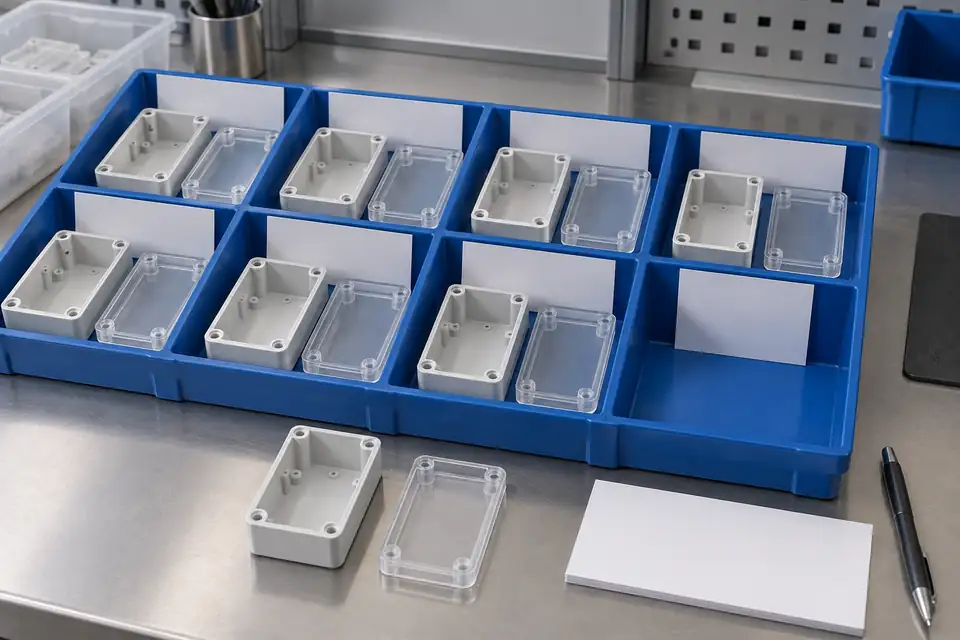
Start with three questions: Which issue is being discussed? Which requirement was missed? Which sample or revision shows it? Record the issue ID, part and drawing revision, trial batch, sample ID and, where applicable, mold or cavity identification. Link the material batch, molding-condition or process-record reference, defect location, drawing feature or appearance requirement, actual observation and photo or report reference.
Original inspection records and corrected samples must remain distinguishable. If a cavity record is unavailable, mark it unknown rather than filling it in. If the acceptance requirement is not confirmed, mark it open rather than calling it passed. The same issue ID should appear on the change record, sample label and retest report.
2. Separate observation, cause hypothesis and corrective action
A dimensional or appearance deviation is an observation, not proof that the mold must be modified. The cause may involve product definition, material, process, measurement conditions or tooling. The responsible engineer should state the cause hypothesis and the evidence needed to verify it; procurement records the owner and coordination needed.
Keep three separate fields: what was observed; the current cause hypothesis and verification status; and the temporary or selected corrective action. Do not diagnose a root cause from one photograph. A defect disappearing after a parameter change is not, by itself, proof of a permanent fix. ASQ’s 8D guidance is useful for the logic of problem definition, cause verification and effectiveness verification. It does not require every T1 project to use a complete 8D, and it is not a certification claim or a LIZHI SOP.
3. Make the action traceable
Use this fillable log:
| Issue ID | Requirement and original evidence | Cause / verification | Actual action and revision | Owner / date | Retest scope and evidence | Conclusion / open item |
|---|---|---|---|---|---|---|
| [buyer to complete] | [drawing feature/report/photo] | [hypothesis/evidence/open] | [tool/process/product change] | [complete] | [sample/cavity/report] | [close/follow up] |
Record product-drawing revision, mold modification, process adjustment, material change and inspection-method change separately. If several conditions changed at once, do not attribute the result to one change without evidence. Engineering and quality should define which related dimensions, appearance zones or assembly interfaces need review. Procurement tracks responses, revisions and open items.
4. Retest against the agreed scope and preserve comparable evidence
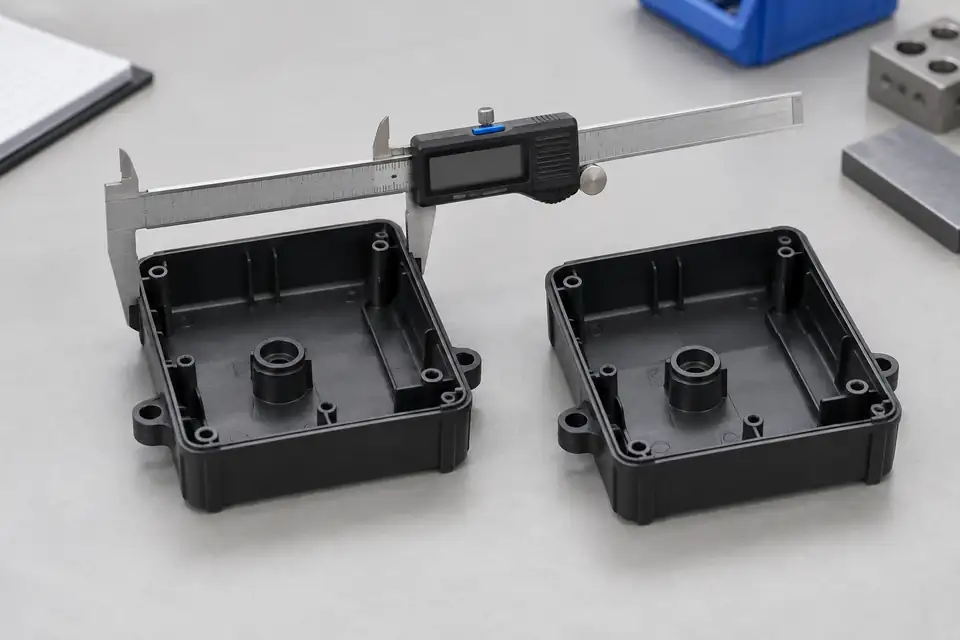
Before retesting, check the drawing and acceptance requirement, sample state, measurement datum and method, molding conditions, and the conditions actually changed. A retest does not require undoing an approved change; it does require enough context to compare the new evidence with the original evidence. Each result should point back to the sample, cavity where applicable and inspection report.
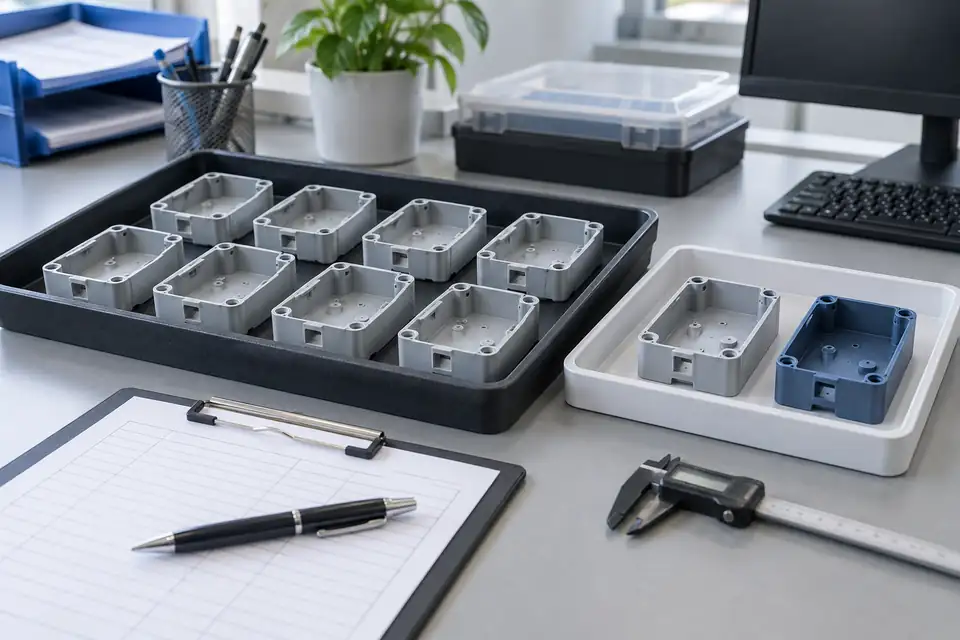
Cover the affected features required by the project plan and list anything not covered. Do not let the best-looking sample represent every cavity or batch. This checklist does not set a sample count, AQL, Cpk or universal tolerance threshold. Those belong to the project requirements and applicable inspection plan. Protolabs and Xometry inspection material can illustrate traceable process changes and drawing-linked reports, but their sample, certification, equipment or inspection options must not be turned into a LIZHI-wide T1 rule.
5. Record closure and approval boundaries
Separate at least four states: action complete, waiting for retest; retest still shows a deviation; verified and this issue is closed; and evidence incomplete. A closure record should cite the retest result, revision used, reviewer and date, and list related open items.
For conditional sample approval, state its purpose, revision, scope, open items, approver and next verification condition. Issue closure, sample-stage approval, final mold acceptance and production validation are separate records. Use the injection mold RFQ checklist when a scope or cost change needs written clarification, the pre-tooling DFM review checklist for earlier design risk, and injection molding service for the service context.
FAQ
Is T1 always the first deliverable sample or a universal acceptance gate?
No. Confirm the definition, inputs, sample purpose and deliverables in the project trial plan.
What is needed before a supplier’s “mold repaired” statement can close an issue?
The change record linked to the original issue, the relevant revision, the retest sample, results covering the agreed scope and a review conclusion. A completed action alone does not prove effectiveness.
Does a recurring defect automatically mean the mold must be modified again?
First check cause evidence and whether material, process, measurement or product revision changed. The responsible engineering team decides the corrective path; procurement records the decision and coordination.
How many samples or cavities must a retest cover?
The project sampling and inspection plan decides. Record the cavity or batch coverage and anything not covered; this checklist sets no universal number.
Does sample approval mean final mold acceptance and stable production?
Not automatically. Approval must state the sample revision and scope; final handover and production validation follow their separately agreed requirements.
Submit drawings and retest questions
Prepare the issue list, drawing revision, sample IDs, corrective-action record and open requirements, then use the inquiry submission page. List unresolved items separately so the supplier, engineering and quality reviewers can answer against the same evidence chain.