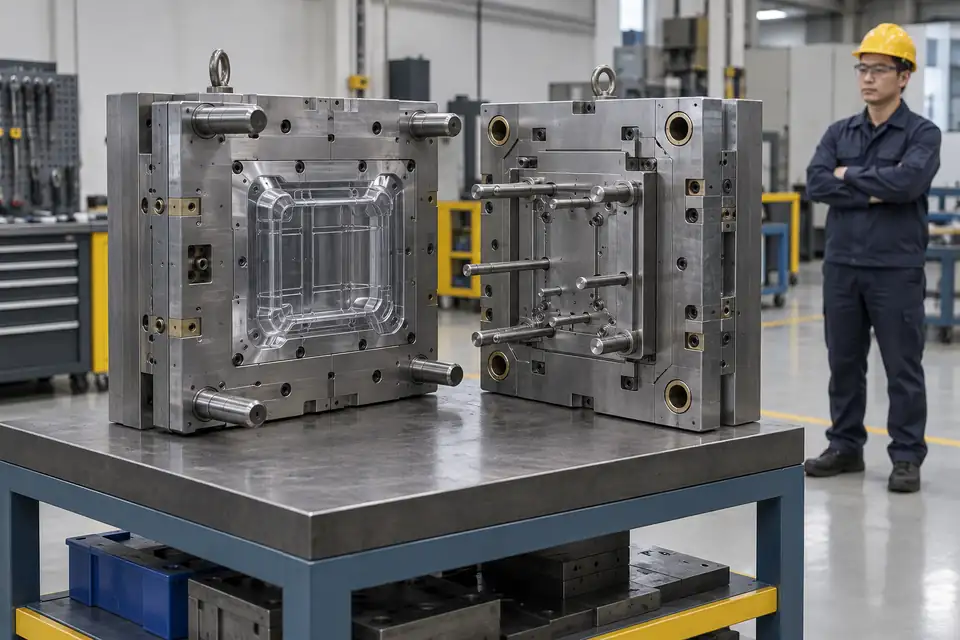
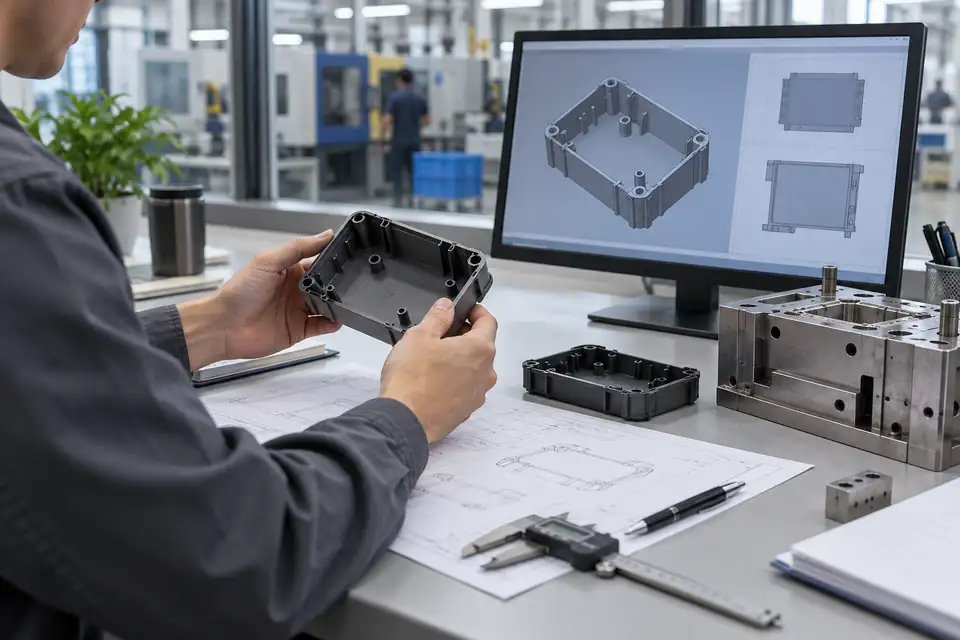
DFM is not a one-way inspection performed after a supplier receives a drawing. It is a set of decisions that purchasing, product engineering, quality and the mold team should confirm before tooling begins. The goal is to expose risks that may affect molding, assembly, appearance, acceptance or maintenance while changes are still manageable.
1. Lock the review inputs before comparing quotes
Before an RFQ or tool kickoff, check that the following documents refer to the same revision:
- 2D drawing, 3D model, datums, critical dimensions and tolerances.
- Resin family, grade, color, fillers, flame-retardant or appearance requirements; if undecided, list the candidates.
- Use case, assembly interfaces, load points, sealing surfaces, sliding surfaces and hidden surfaces.
- Expected use, lot context, delivery market, packaging and who approves inspection records.
- Appearance class, texture, parting-line limits, ejector marks, gate marks and permitted rework.
Without these inputs, a fixed wall thickness, cycle, cavity count, material recommendation or quote comparison can be misleading. Put open questions in a log and assign an owner from product, quality, process and supply management.
2. Geometry: can the part fill, release and assemble?
Wall thickness and transitions
Look for abrupt changes, enclosed thick sections and areas that are difficult to cool. Thickness changes can influence filling, cooling, sink and warp, so one cross-section is not enough. Ask which regions should remain consistent, where coring or ribs could preserve function, and whether a change affects appearance or strength. Public DFM references treat consistent wall thickness and avoiding unnecessary mass as general design concerns, but the actual recommendation depends on resin, geometry and the customer’s criteria.
Ribs, bosses and radii
Do not thicken ribs or screw bosses only to gain strength. Check sink, weld lines, flow, inspection access and tool access. Sharp transitions can increase stress and machining difficulty. Confirm the priority between radius, texture, appearance and assembly function.
Draft, undercuts and parting
Ask whether the main outside faces, inside walls, ribs and textured surfaces have a workable release direction. If there is an undercut, record whether the proposal uses a slide, lifter, insert, split or a geometry change, and what that means for maintenance, appearance and cost. A parting line is not a late cosmetic mark: it affects flash, assembly, appearance and inspection datums.
Ejection and assembly boundaries
The DFM should identify ejector areas, deformation-sensitive features, weak clips and surfaces that cannot accept marks. Ejection must be reviewed together with part removal, downstream assembly and the appearance standard.
3. Turn filling, venting and cooling into buyer questions
Purchasing does not need to choose every gate location, but the DFM should explain:
| Review question | Output to request | Decision to confirm |
|---|---|---|
| Where will the gate be? | Gate, flow direction and likely weld lines | Are appearance, assembly and finishing acceptable? |
| Where will air escape? | Vent locations and possible trapped-air zones | Is a design or acceptance change needed? |
| Which zones may warp? | Thickness transitions, cooling risks and deformation concerns | Which dimensions are critical and how will they be checked? |
| How will cooling be handled? | Cooling regions and heat-concentration concerns | Is a trial result or sample review required? |
A simulation is a way to ask better questions, not a final result. Material, machine, process window, mold condition and acceptance criteria still need to be confirmed in the later stages.
4. Connect the mold proposal, samples and acceptance plan
Before tooling, create a risk log with the feature, risk type, proposed action, owner, due date and closure evidence. Purchasing should confirm:
- Which changes are in the latest 2D/3D revision and which are only discussion points.
- Which dimensions, appearance features, assembly functions and tests are mandatory for first-article review.
- Who records trial defects, who approves a mold change and who controls the sample revision.
- What sampling, acceptance and record-retention rules apply to a trial or small-lot check.
ISO describes quality management in terms of customer requirements, controlled processes, monitoring and continual improvement. ISO 2859-1 explains that AQL-based sampling depends on lot context and acceptance rules; it is not a universal number that replaces the customer’s specification.
5. The minimum package to send with an RFQ
Send the latest 2D/3D files, material and appearance requirements, intended use, expected volume, critical dimensions, assembly interfaces, acceptance criteria, known restrictions and the three to five questions you want answered. Use clear file names and revision numbers so old models are not mixed with current drawings.
FAQ
Is DFM the same as a mold quotation?
No. DFM identifies manufacturability and acceptance risks. A quotation also depends on the proposed scope, materials, mold structure, trials and delivery boundaries. A low price or fixed lead time is not a comparable conclusion when the inputs are incomplete.
Should buyers specify one wall thickness or draft angle?
Not automatically. Provide functional, appearance, assembly and material constraints, then ask the supplier to state the design assumptions. The recommendation depends on geometry, resin, texture, release direction and customer standards.
When should the mold concept be frozen?
Freeze it after risks, responsibilities, acceptance items and revision numbers are recorded, and every open item has a clear closure method agreed by product, quality and the supplier.
Can DFM start without a complete 2D drawing?
A preliminary question list can start, but it is not a manufacturing basis. Missing datums, tolerances, material or appearance requirements should remain explicit open inputs.
How do we start a project review?
Use the site inquiry entry to send the drawing, sample and project requirements, and state which geometry, appearance, assembly and acceptance risks need attention. Feasibility and the appropriate approach still need to be assessed against the submitted information.
Send the drawing and review questions
Prepare the latest drawing, 3D model, material, intended use and acceptance requirements, then use the inquiry submission page. If the project is still conceptual, list the undecided conditions so the review can focus on risks and decisions.