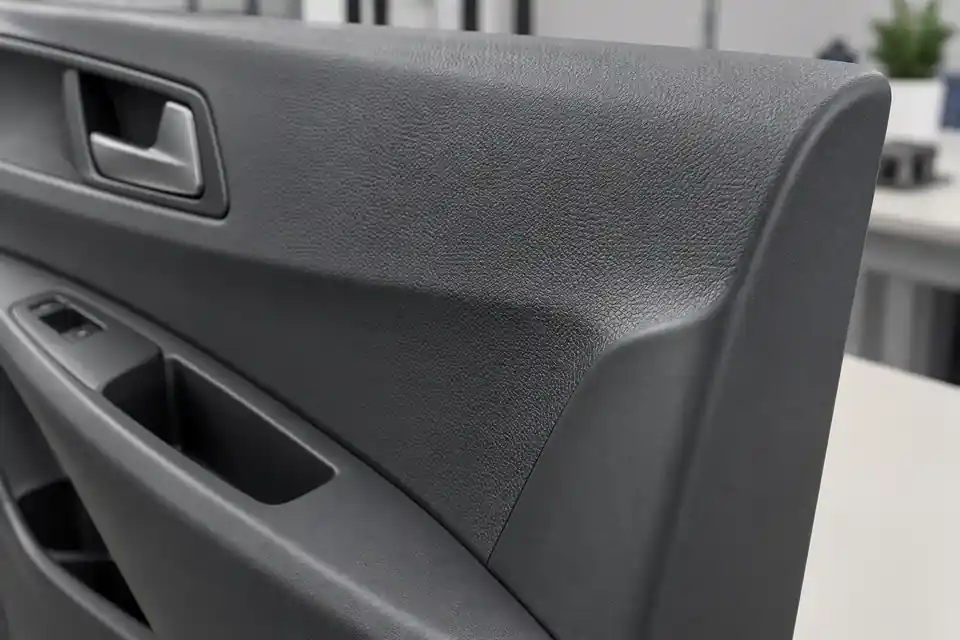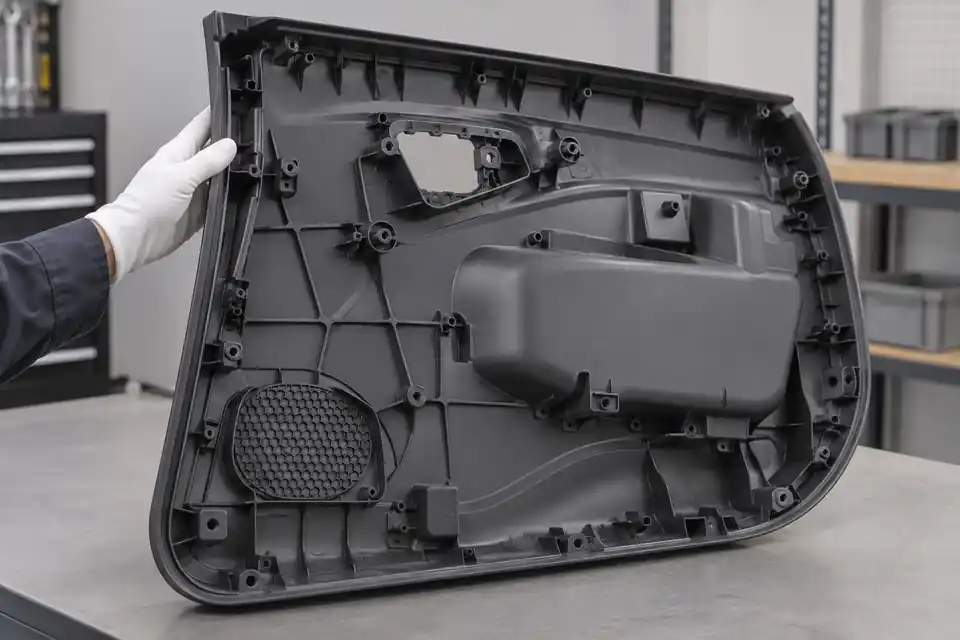
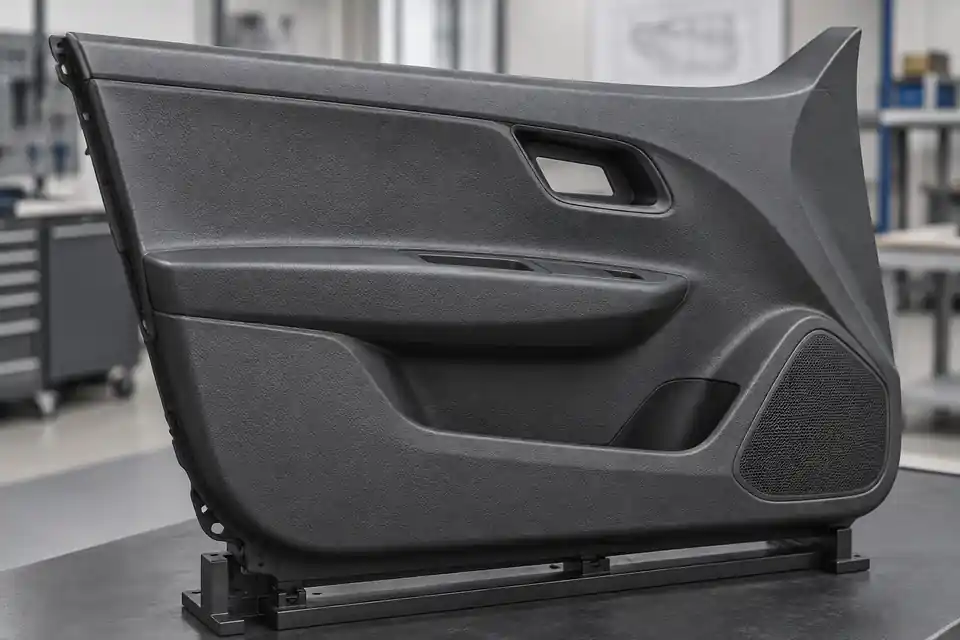
A long mark on a grained automotive door-trim surface is not automatically a draft-angle problem. First confirm that the surface carries molded-in grain, then record the mark location, timing, actual release direction, texture boundary, and ejector contact separately. This article excludes metal outer door panels, bonded leather or fabric, soft trim, and painted coatings. It does not assume PP, ABS, a filled system, or any particular grade; it is a pre-tooling review aid for structure, tooling, and purchasing teams.
1. Confirm the molded textured plastic surface before recording the mark
Define the scope as an automotive interior plastic surface with grain formed in the mold. On the current part revision, mark the controlled appearance zone, grain area, grain-to-smooth transition, and where and when the mark appeared. A photo is evidence of an observation, not a diagnosis from shape alone. Keep demolding drag, ejector contact, handling, and transport marks as separate possibilities.
Use the automotive door-panel mold page for product scope and the pre-tooling DFM review checklist for revision and drawing inputs. Protolabs explains that draft can reduce contact during release and that texture needs additional attention in its draft guide. This section should produce a located observation with a time point, not a root-cause conclusion.
2. Verify pull direction and model orientation before reading draft analysis
Use the actual tooling concept to confirm the relative release direction from the core or cavity. If side actions or staged release exist, the project engineer should identify them in the tooling concept or drawing. Do not treat an arbitrary global model axis as the answer.
The Autodesk draft-angle result guidance shows that model orientation and the display-band threshold affect a particular result. The analysis image should therefore carry the model revision, reference direction, and threshold basis. A color band is a geometric indication under stated conditions, not proof that the textured surface will release without damage.
| Review object | Record | What it cannot prove by itself |
|---|---|---|
| Grain / smooth boundary | Region, revision, texture definition | The visible boundary alone does not identify the cause |
| Local release direction | Tooling concept, orientation, side actions | An arbitrary model axis is not the actual release direction |
| Mark and ejector contact | Location, timing, contact relationship | An ejector mark is not automatically a drag mark |
3. Map the texture region and local draft conditions together
Place the grained area, grain-to-smooth boundary, actual side walls, and transitions on the same review view. The product owner should define the texture; do not invent a texture code or depth, or substitute a blasting example for a door-panel requirement. The Protolabs surface-finish guidance discusses the relationship between mold surface treatment, material, and the molded surface.
Texture, material, local geometry, and actual release direction need to be evaluated together. This article does not provide a universal draft angle or turn a supplier example into a standard for every door panel. A smooth, untextured trial that releases does not by itself prove the final textured state will release; that is an editorial inference requiring final-state validation.
4. List non-negotiable appearance and interface conditions before changing draft, texture, or ejection
If a change to local draft, the texture boundary, or ejector contact is proposed, list the appearance zones, neighboring interfaces, locating features, and product intent that must not change. Draft changes can alter shape and fit; moving or polishing texture can alter the approved appearance. Keep demolding drag marks separate from ejector contact marks.
Ejector locations must be considered with geometry, texture, material, and appearance requirements. The Protolabs ejector-pin guidance is general technical background, not this door panel’s mechanism layout. Do not replace review with more ejection force, a guessed pin count, or a fixed mechanism. The mold design and manufacturing service page is an implementation-context link, not evidence of this project’s result.
5. Turn the review into validation requirements for the final surface state
Convert the outcome into a worksheet: surface region | texture/material revision | basis for release direction | candidate change | protected appearance/interface | evidence still needed. Review appearance and assembly separately under the project’s agreed conditions, covering the final texture, material, and color. Do not use an untextured sample as a substitute for all final-surface checks, and do not invent a viewing distance, illuminance, sample count, or tolerance.
For sample and process validation, see injection molding and tryout service. Use submit door-panel drawings and texture details to send the current revision, marked texture region, and observation photos. This article does not promise zero drag marks, an OEM endorsement, certification, service life, or lead time.
For related scope, see automotive plastics molds.
Frequently asked questions
Does a long mark on door-panel grain prove demolding drag?
No. Record timing, location, and part/tooling revision first, then keep demolding drag, ejector contact, handling, and transport marks as separate possibilities.
What draft angle should every grained door panel use?
There is no universal angle here. Evaluate texture definition, material, local geometry, actual release direction, and tooling concept rather than copying a supplier example.
Why review the part if the CAD draft map shows an acceptable color?
Check model orientation, reference direction, and display threshold. A software result is a geometric indication under stated conditions, not an appearance or release certificate.
If an untextured trial releases cleanly, must the textured version still be checked?
Yes. The final texture can change release conditions, so an untextured trial cannot replace validation of the final texture, material, and color state.
Can polishing away the texture or increasing draft authorize release immediately?
No. Either change can affect approved appearance or interfaces. The project owner must confirm the change and validate it under actual conditions.
Can demolding drag marks and ejector marks be handled as one issue?
Not automatically. Their contact locations and formation paths may differ; identify them separately before selecting design or validation inputs.